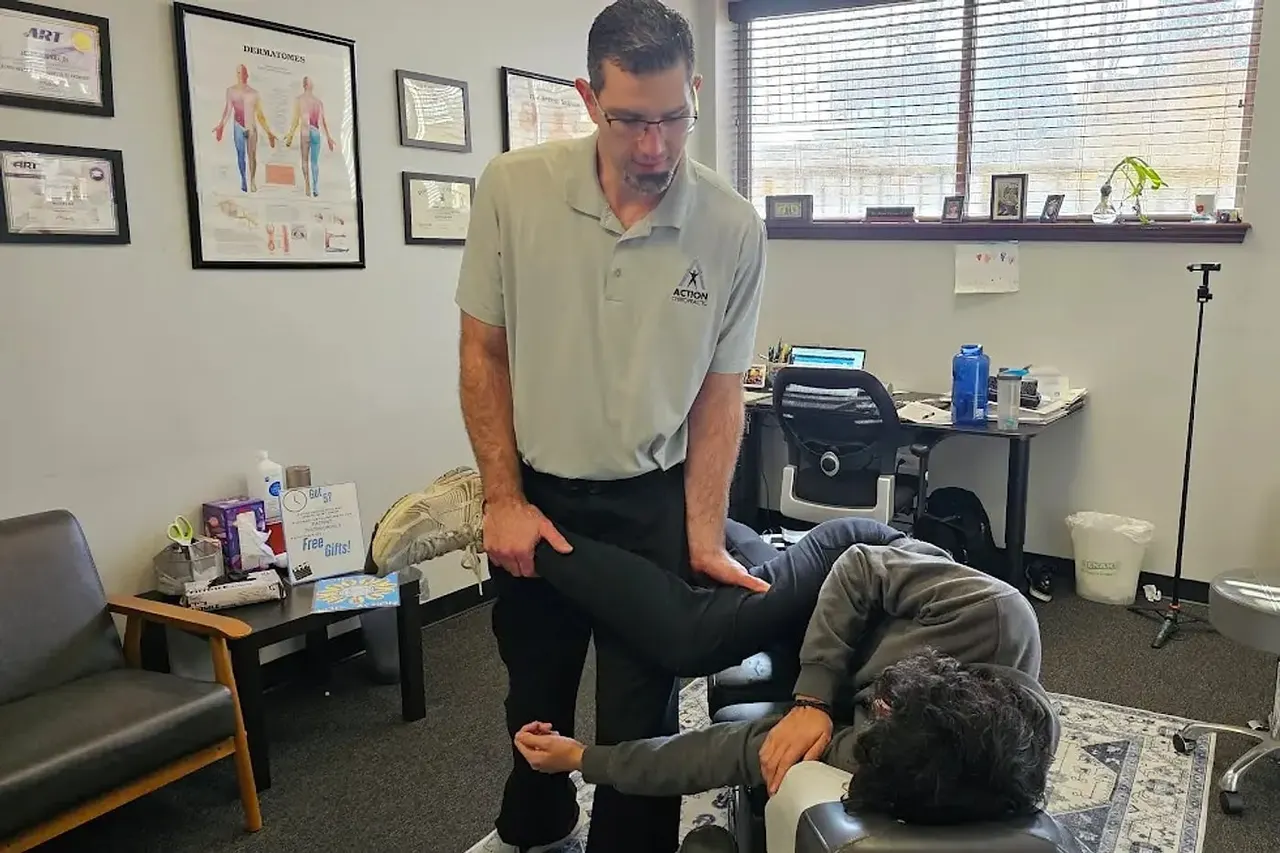
Our services
Eleven therapies,
one roof.
From adjusting and Active Release to dry needling, laser and DOT physicals. What you get is decided by the assessment, not by what we happen to own.
What people travel here for.
Three of the therapies patients most often name when they tell us why they chose this practice.
01
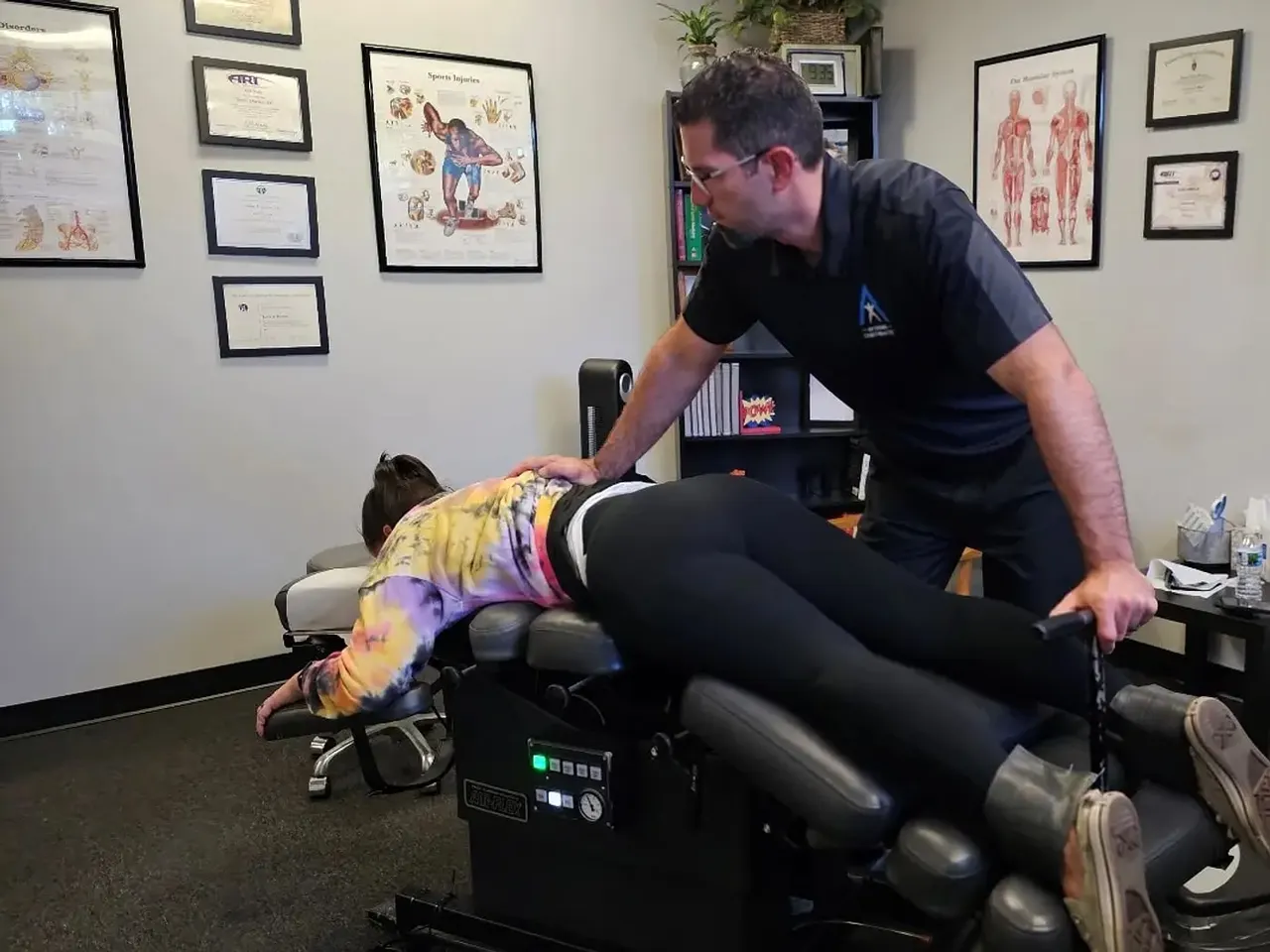
Chiropractic Care
Hands-on care for the spine and joints, aimed at restoring the motion you have lost rather than just quieting the ache.
02
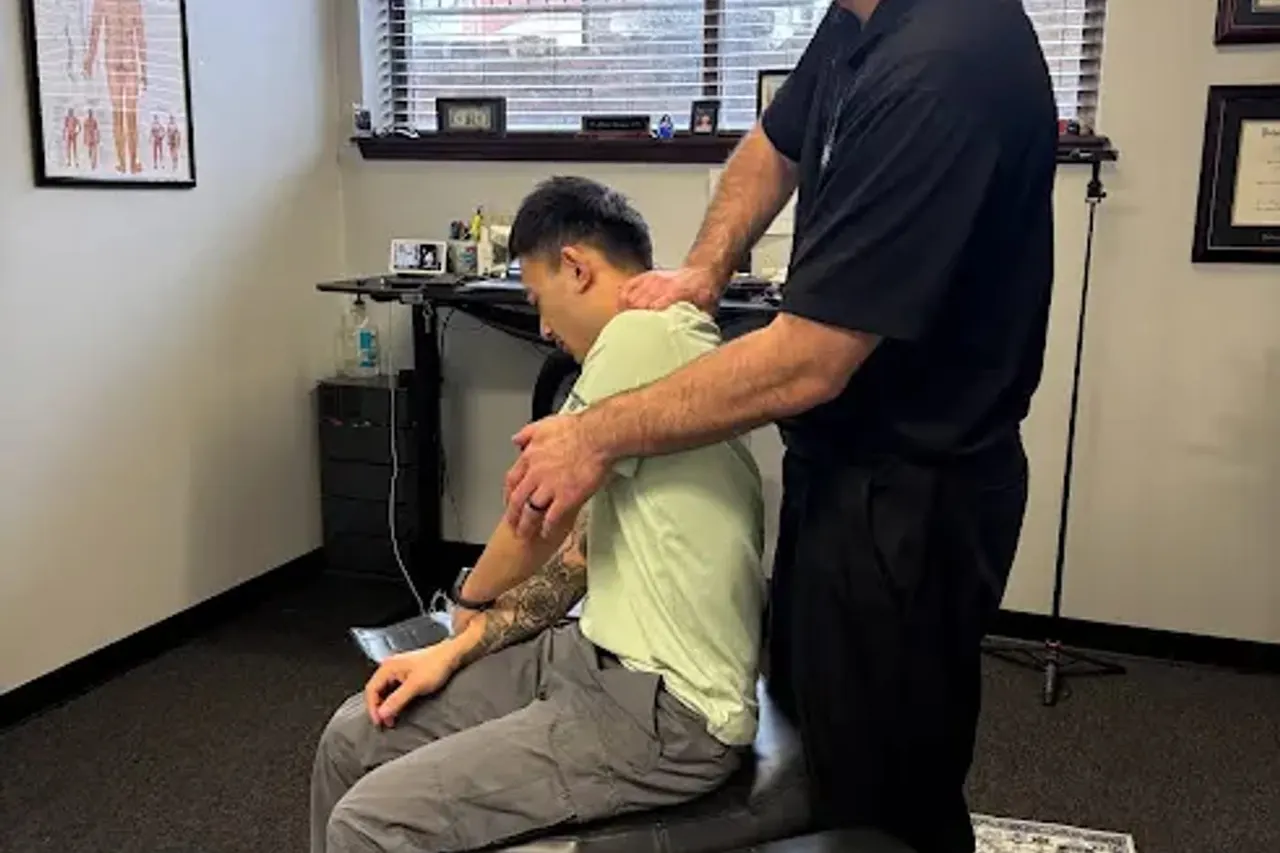
Active Release Techniques (ART)
A certified, hands-on soft tissue method for the scar tissue and adhesions that build up in overused muscle, tendon and nerve.
03
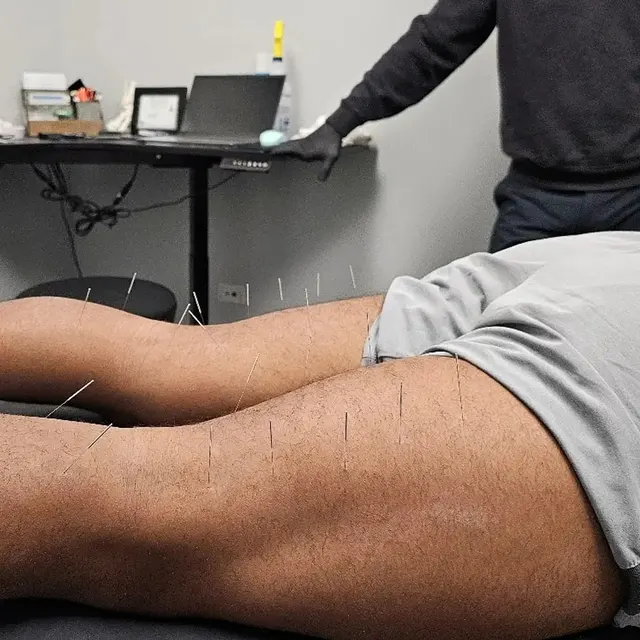
Dry Needling
A thin sterile needle into the trigger point itself, to release muscle that has not let go on its own.
Core care
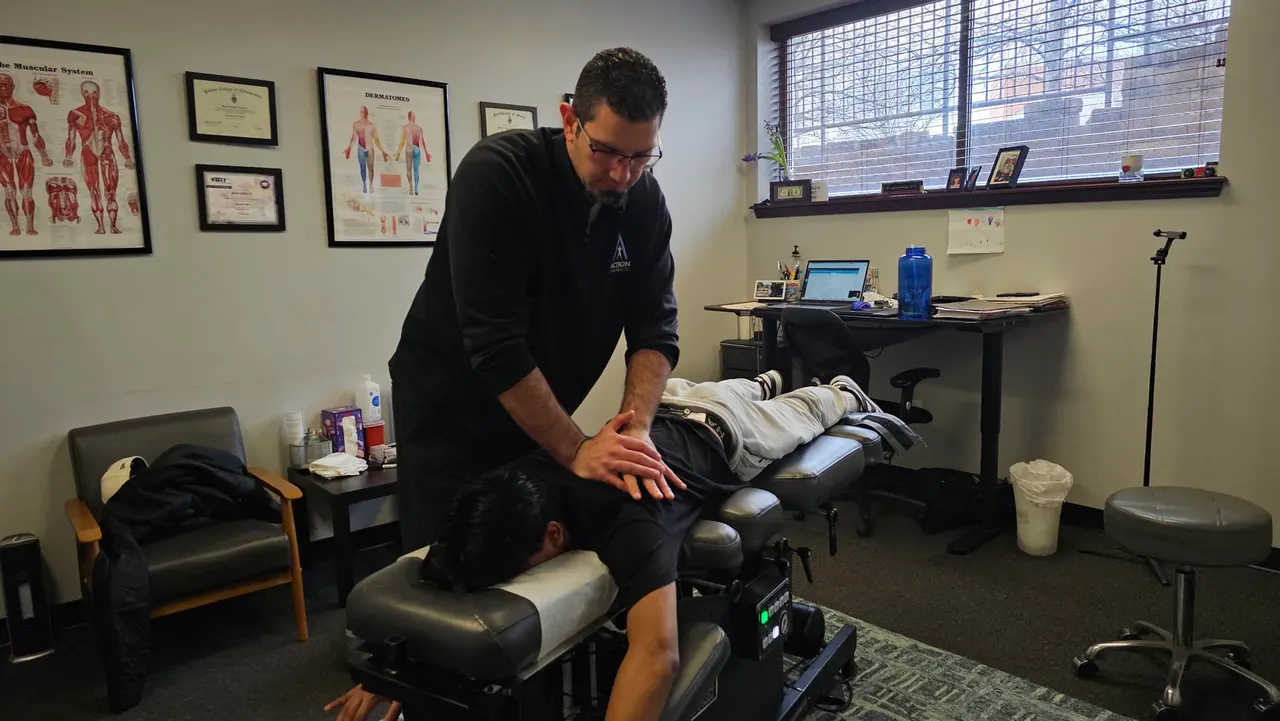
Chiropractic Care
Chiropractic care here is manual work on the spine, joints and surrounding muscle. When a joint stops moving the way it should, the tissue around it stiffens and the load shifts somewhere else. That is usually why the pain shows up in a different place from the problem.
We adjust restricted joints to restore normal mechanics, then check that the change holds. Most visits pair the adjustment with soft tissue work, because a joint that has been stuck for months rarely stays free on its own.
- Specific adjustments, not a routine everyone gets
- Paired with soft tissue work in the same visit
- Drug-free and non-surgical
- Re-checked so you know whether it is holding
Certified soft tissue
Active Release Techniques (ART)
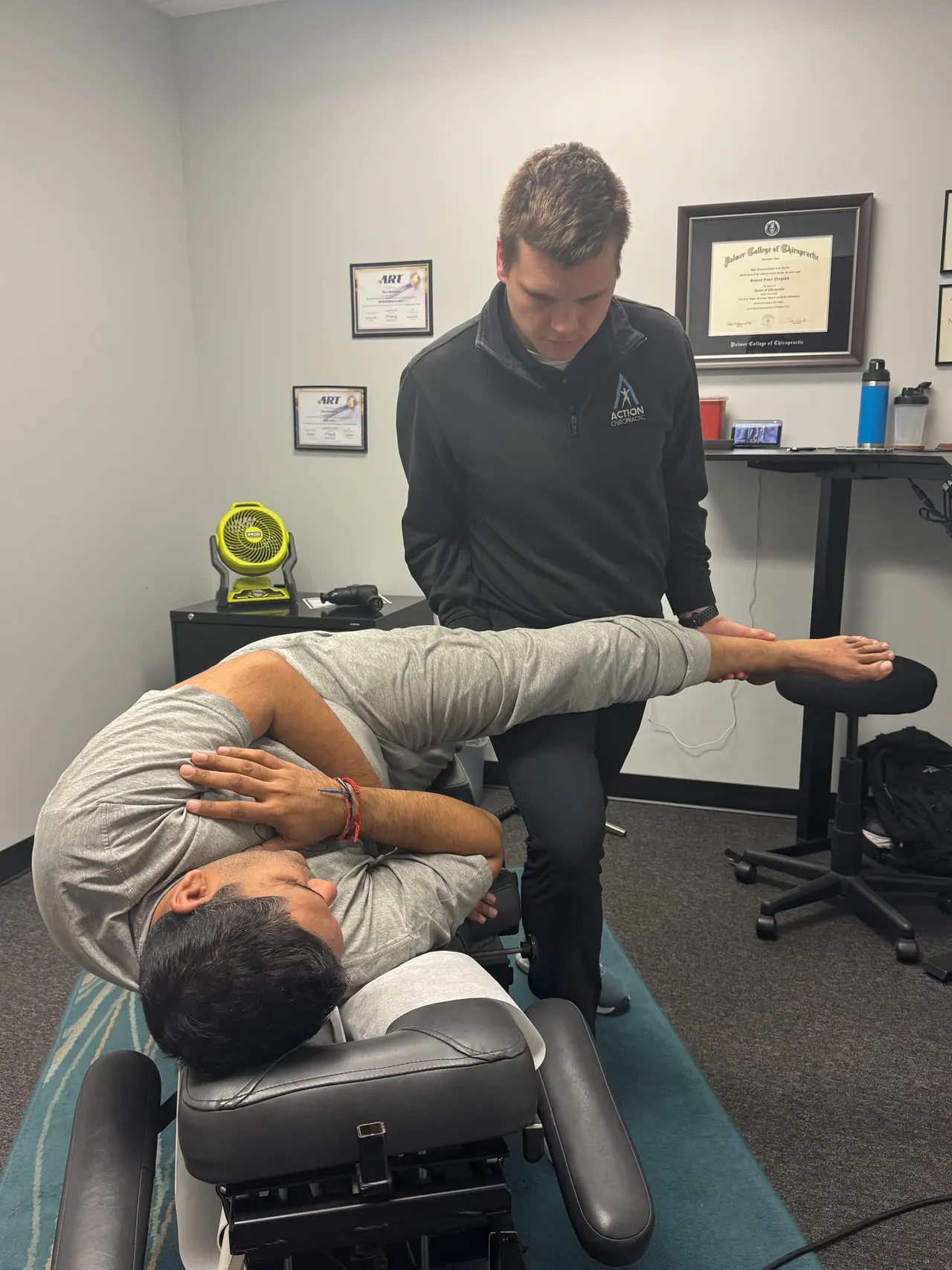
Active Release Techniques was developed by Dr. P. Michael Leahy, who noticed that most stubborn soft tissue problems shared one thing: scar tissue and adhesions restricting normal movement. ART is a patented system for finding and releasing them.
It is the therapy patients most often travel to us for. Dr. Durnas is ART certified, and it is the reason a lot of runners, lifters and desk workers end up here after other treatment has stalled.
- Certified provider, not an approximation of the technique
- Targets muscle, tendon, ligament, fascia and nerve
- You move while pressure is applied, which is what makes it work
- Built for repetitive strain and overuse
Trigger point therapy
Dry Needling
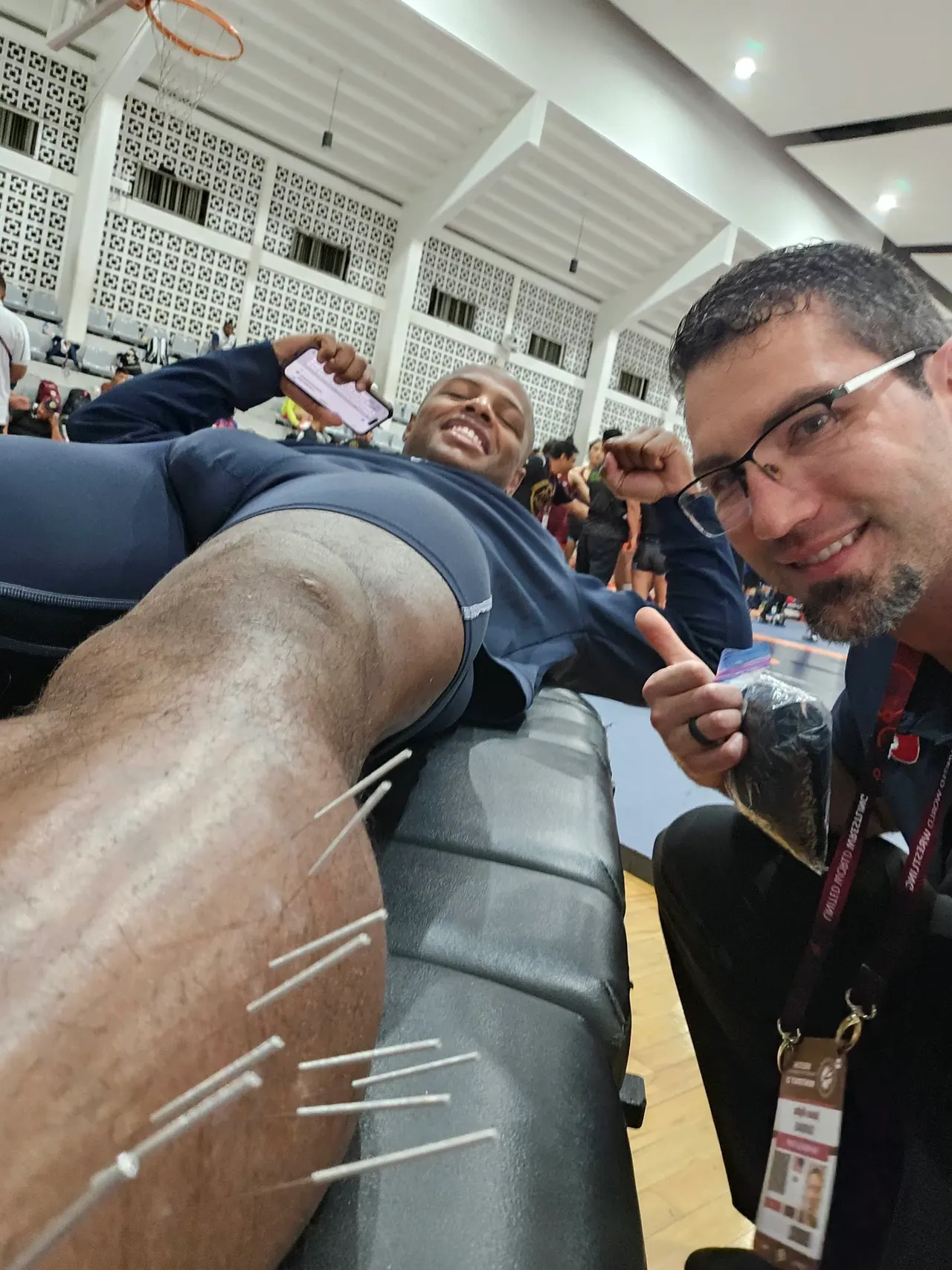
Dry needling puts a sterile filament needle directly into the trigger point driving your pain. The muscle usually twitches and then releases. Most people describe a deep ache for a moment, then noticeably looser movement.
It is popular with athletes because it reaches tissue that hands cannot get to efficiently, and because the change is often immediate enough to train on the same week.
- Sterile, single-use needles
- Targets trigger points, not meridians
- Often paired with ART or adjusting in the same visit
- Useful for spasm, overuse and chronic tightness
Non-invasive
Cold Laser Therapy
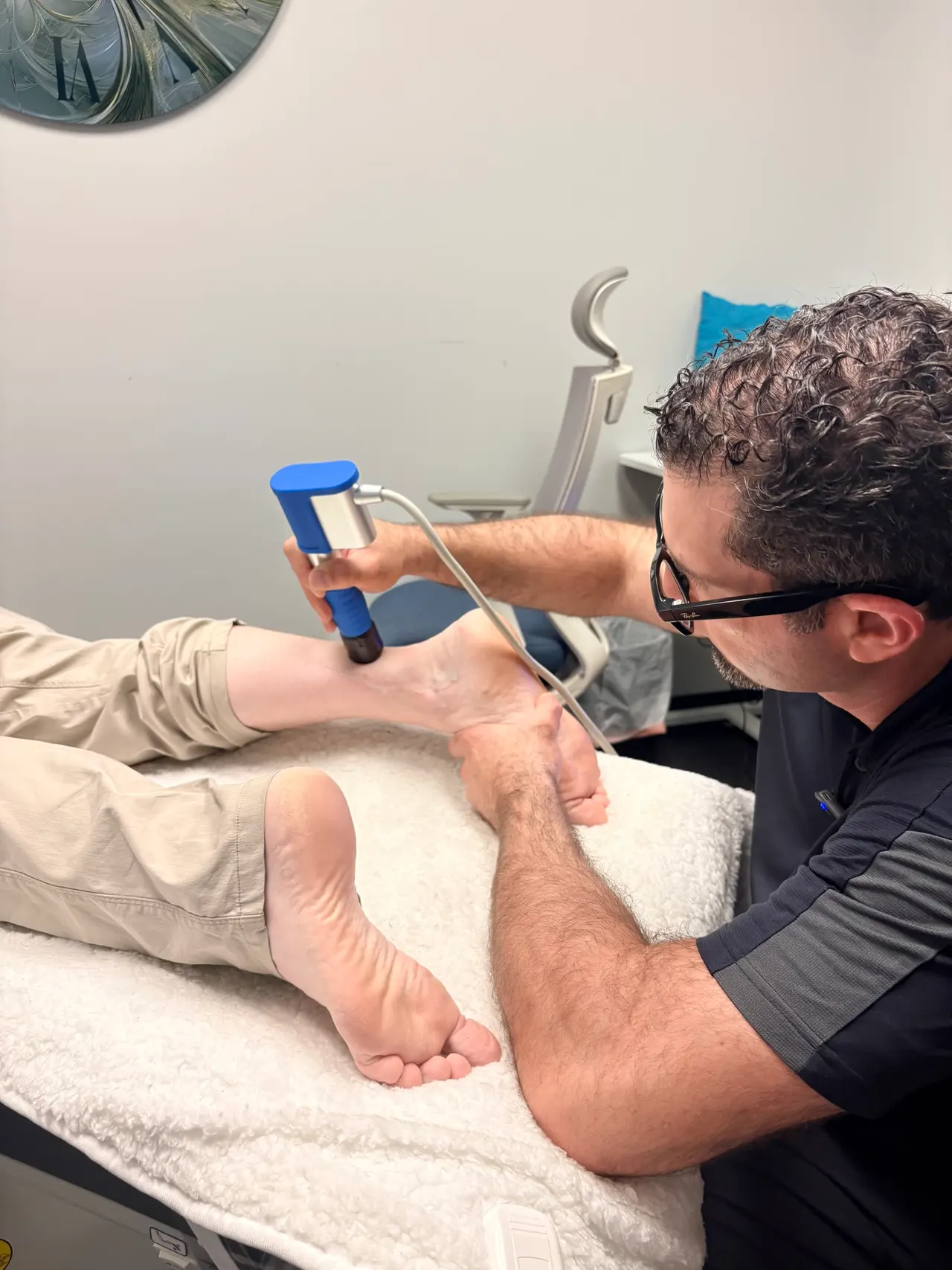
Cold laser therapy, also called low-level laser therapy, uses low-intensity lasers or LEDs at particular wavelengths. It raises tissue temperature only minimally, which is why it is considered a low-risk option for athletes in season.
The intent is to increase oxygen flow to the tissue and support ATP production, the cell's energy source. Patients typically use it alongside manual care rather than instead of it.
- Non-invasive, with no incision and no medication
- Comfortable enough that most people feel very little
- Frequently combined with soft tissue work
- Suitable in-season for athletes
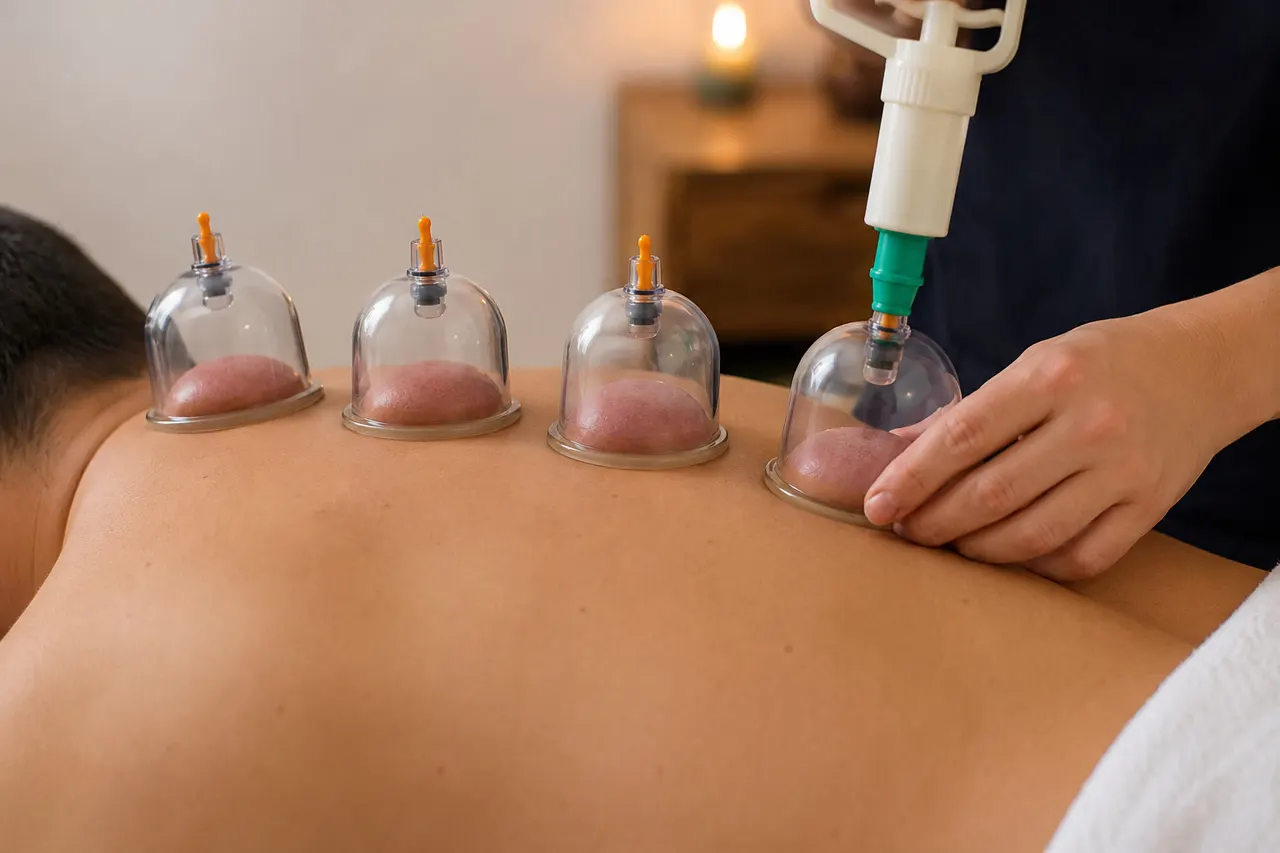
Decompression
Cupping Therapy
Cupping is often described as deep tissue work in reverse. Rather than pushing into the muscle, the cups draw skin and tissue up, separating the layers underneath.
That decompression is useful for long-standing tension and for areas where direct pressure is uncomfortable. It leaves circular marks for a few days, which are not bruises in the usual sense.
- Lifts and separates tissue layers
- Supports local circulation
- Comfortable alternative when direct pressure is too sore
- Used for chronic tightness and myofascial restriction
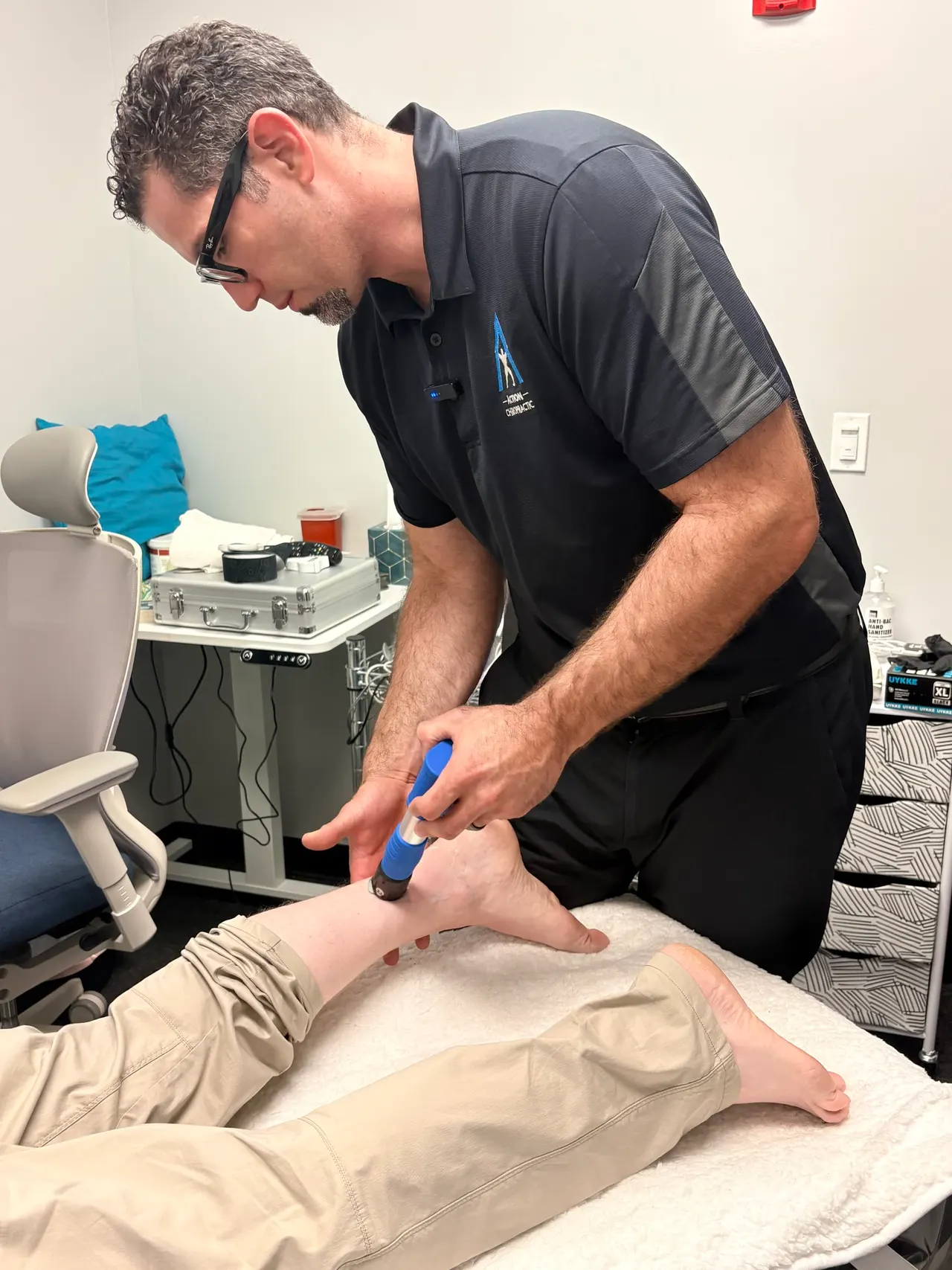
Instrument assisted
Instrument Assisted Soft Tissue Mobilization (IASTM)
IASTM uses specialised stainless steel instruments across the surface of the skin. The tool transmits what the hand cannot always feel, so restrictions and adhesions become obvious to the practitioner and can be worked precisely.
The controlled treatment prompts a local healing response. It is a good fit for older scar tissue and for areas where hands alone have plateaued.
- Locates restriction the hand can miss
- Controlled and precise rather than aggressive
- Well suited to established scar tissue
- Tailored per session rather than a fixed protocol
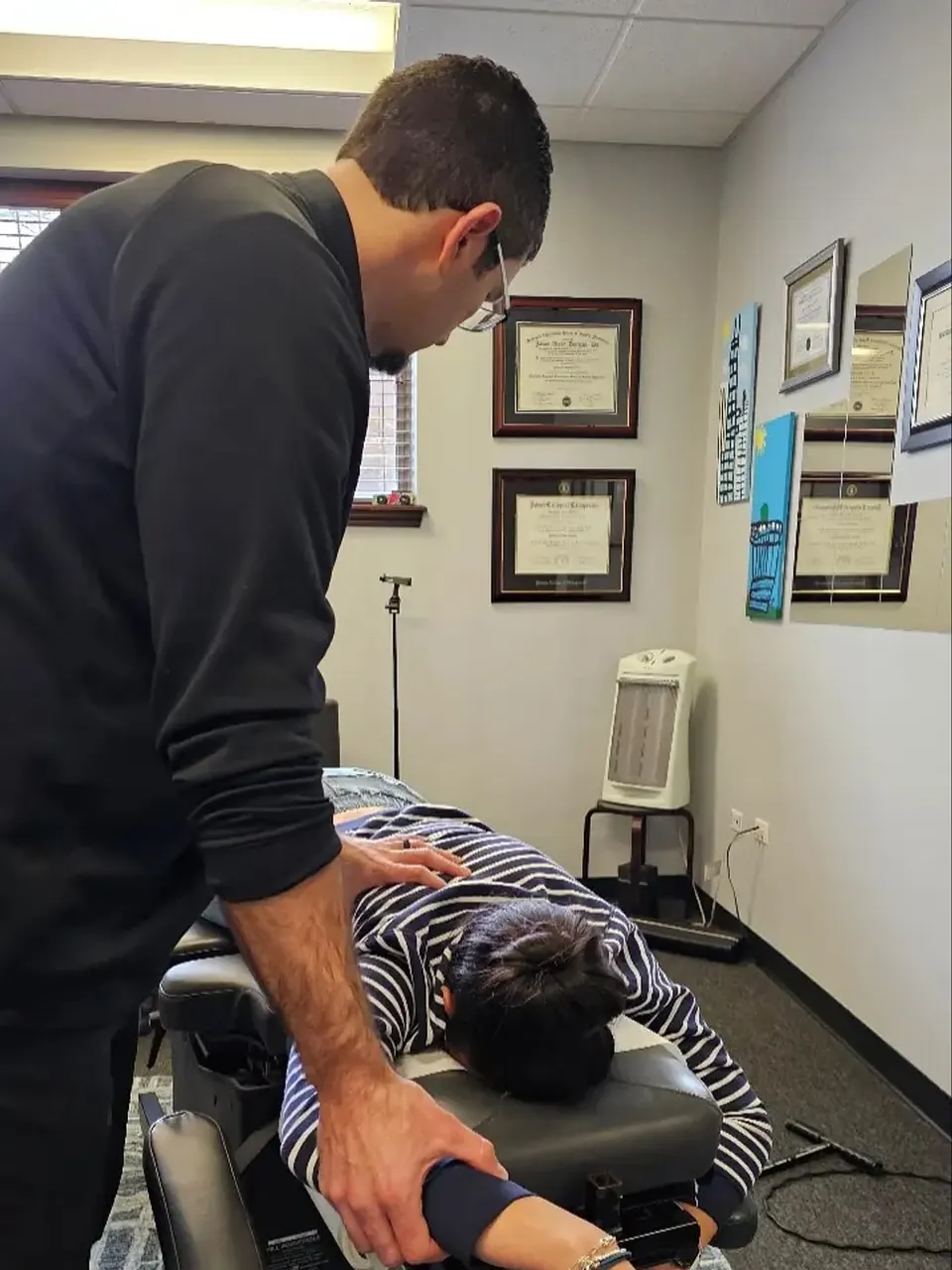
Flexion distraction
Lumbar and Cervical Disc Decompression
The clinic uses the Cox Flexion Distraction Technique, which applies slow, controlled traction to the lumbar or cervical spine on a segmented table. The motion is rhythmic and gentle, and it is a common choice when a disc is involved and a forceful adjustment would not be appropriate.
It is often the entry point for people who arrive nervous about being adjusted at all, because there is no thrust and no cavitation.
- No thrusting and no popping
- Applies to both the low back and the neck
- A reasonable option when a disc is involved
- Gentle enough for people wary of adjusting
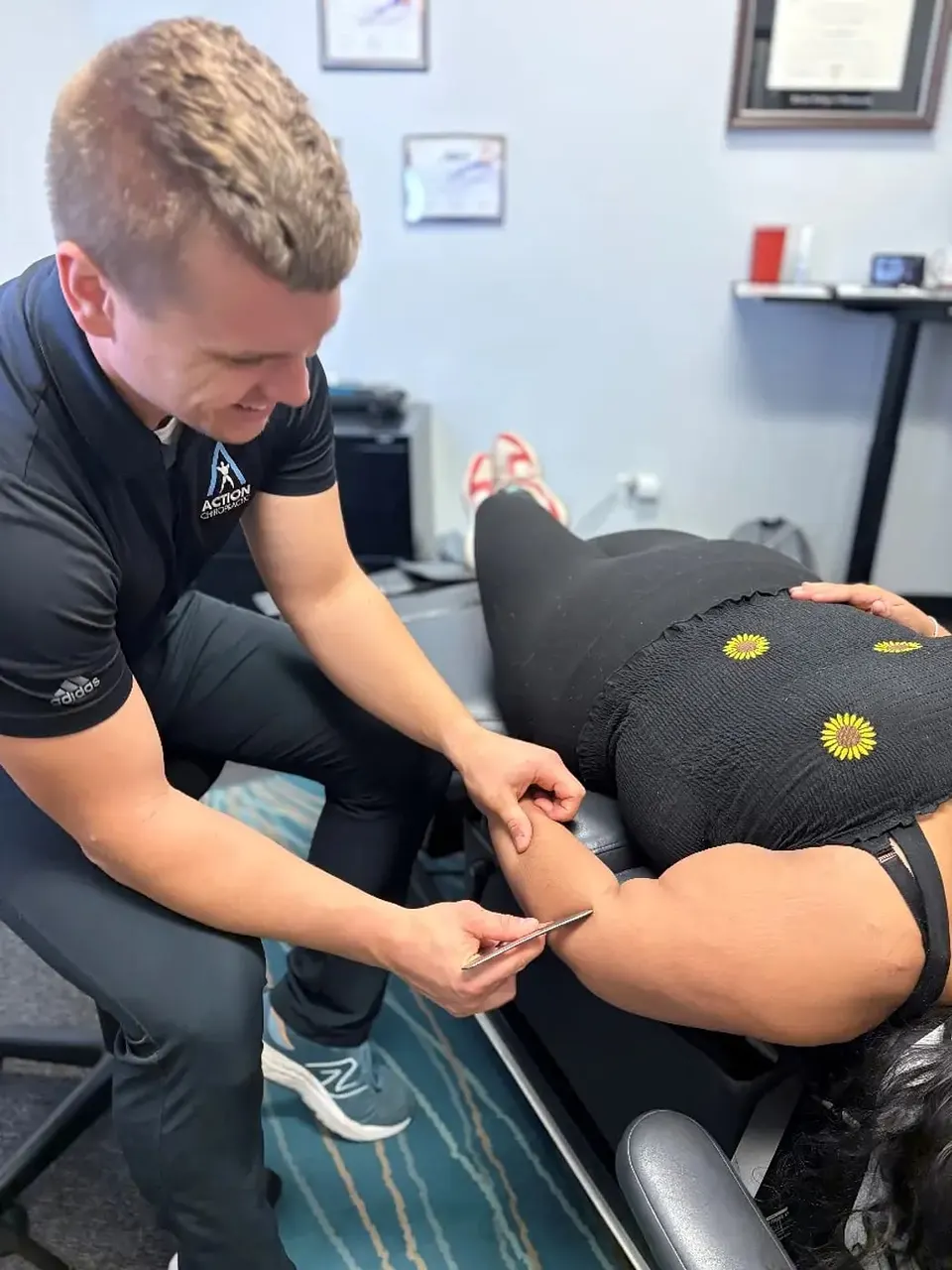
Head to toe
Extremity Adjustments
A minor problem in a finger or a toe changes how you move. Alter how you walk for long enough and the compensation turns into a bigger problem somewhere up the chain.
Extremity adjusting restores alignment and range in the joints away from the spine, using stretching, graded pressure and specific adjusting to improve joint mechanics.
- Shoulders, elbows and wrists
- Hips, knees and ankles
- Hands and feet
- Useful when a compensation pattern has set in
Multi-system rehab
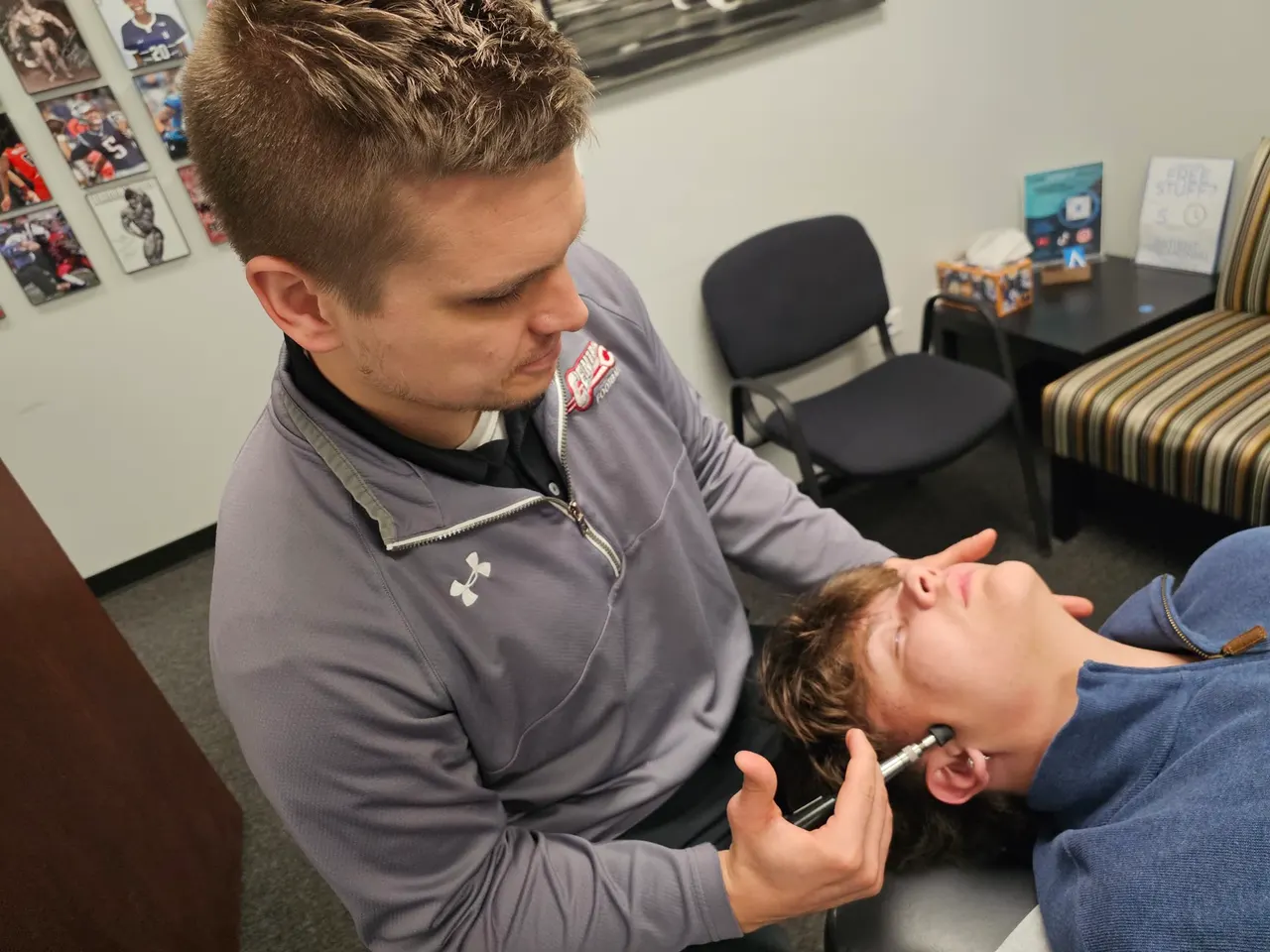
Concussion Treatment
A blow to the head or a sudden jarring of the body does more than rattle the brain. It sets off neurological and physiological changes that can stall everything you do.
We treat concussion as a functional injury. The work is identifying which systems were compromised, vestibular, ocular or cervical, and rehabilitating those specifically. That is a different approach from rest-and-wait, and it is why this sits alongside our sports work rather than apart from it.
- Vestibular, ocular and cervical systems assessed separately
- Active rehabilitation rather than passive rest
- Staged return to activity
- Neurological drills alongside physical work
Certified examiner
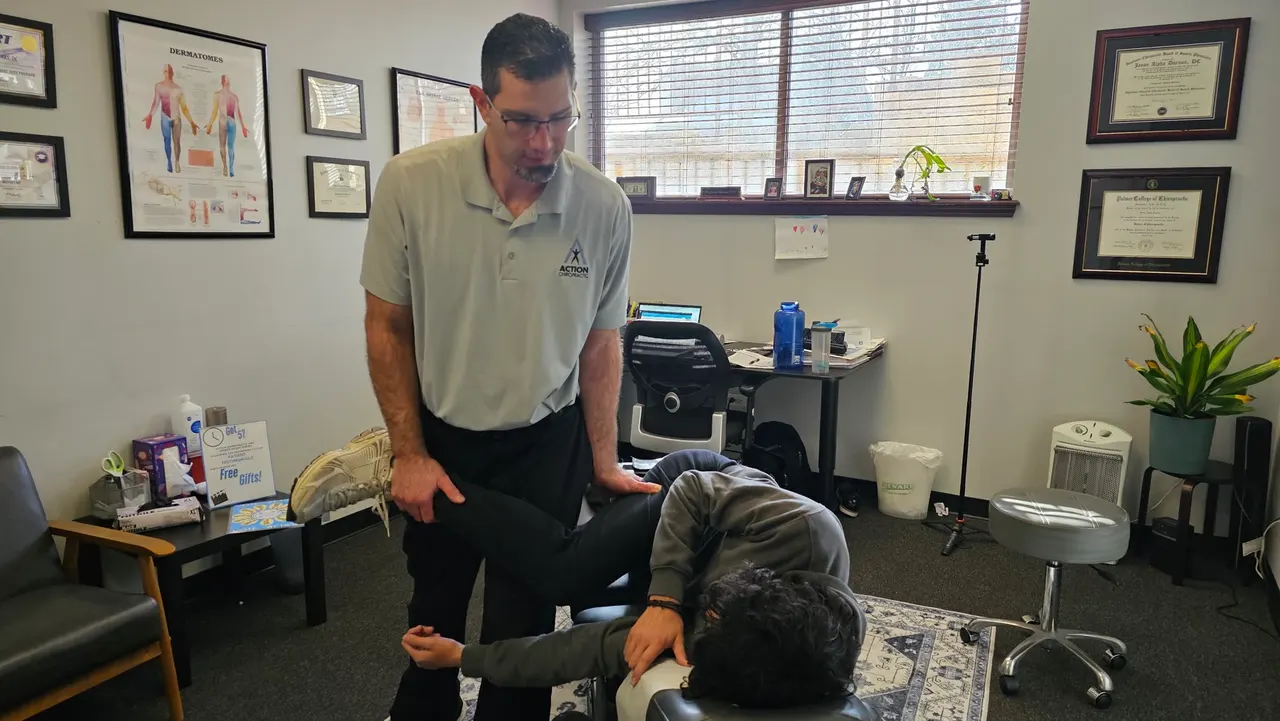
DOT Physical Exam
A DOT physical confirms that a commercial driver meets the medical standards required to operate safely. The exam covers vital signs, vision, hearing and blood pressure, along with overall fitness for duty.
Drivers need to pass it to obtain or renew a CDL. We see truckers, bus drivers and anyone operating a commercial vehicle, and we run them efficiently because we know a day off the road costs you.
- Meets FMCSA standards
- Vision, hearing, blood pressure and fitness for duty
- Required to obtain or renew a CDL
- Serving Naperville, Romeoville, Joliet and Plainfield
Children and teens
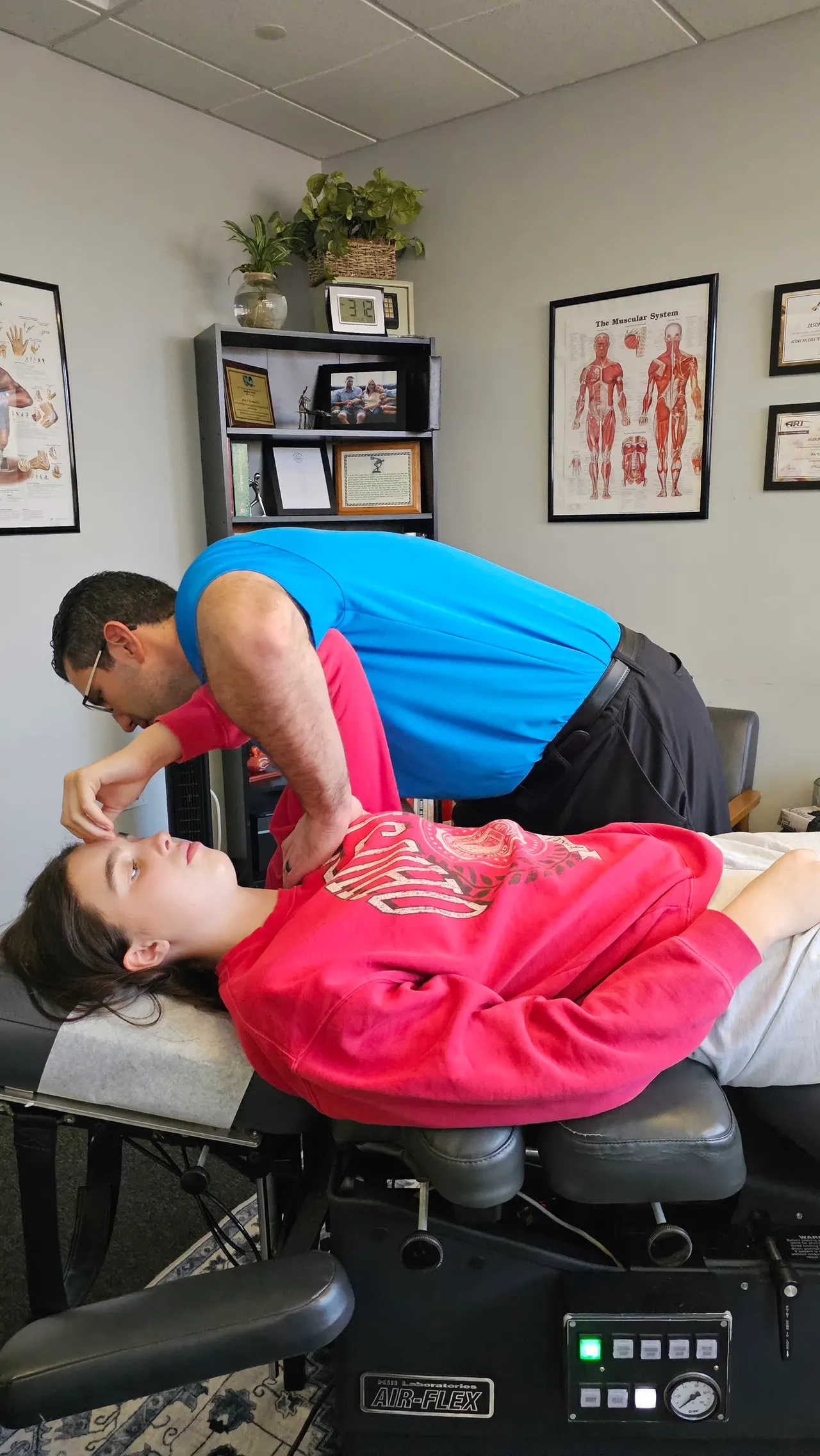
Pediatric Chiropractic
Children are not small adults, and the technique changes accordingly. Pediatric work here is low force and specific, and a lot of it involves teen athletes who are growing quickly and loading their bodies hard at the same time.
Parents usually arrive with a specific question rather than a general one. We would rather answer that question honestly, including telling you when we do not think care is needed.
- Low-force technique scaled to the child
- Common with growing teen athletes
- Parents stay in the room throughout
- Straight answers, including when nothing is needed
Ready when you are
Not sure which one
you need?
That is what the first visit is for. Book in and we will work it out together.