Neck Pain
Everyday neck pain, the kind that builds through a working week and makes checking your blind spot an event.
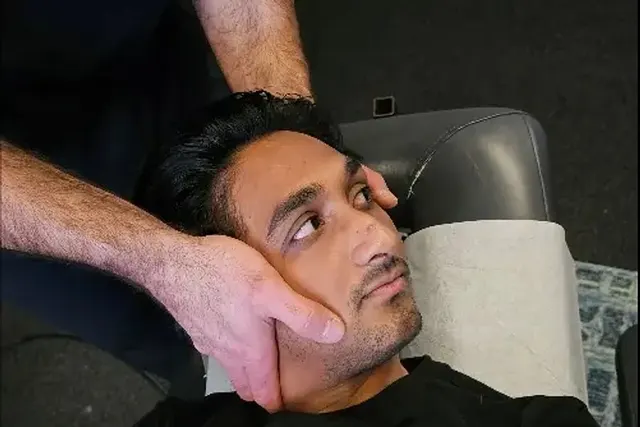
What it is
Understanding neck pain
Most necks we see are not only a neck problem. If the mid-back has stopped rotating, treating the neck alone means the same restriction returns within weeks.
So we assess both, and treat where the restriction actually is rather than where the pain is loudest.
What is behind it
Where it usually comes from.
Sustained desk posture. Hours with the head forward loads the lower neck continuously rather than intermittently.
Restricted mid-back. When the thoracic spine stops rotating, the neck takes up the slack and does more than it should.
Repetitive one-sided load. Carrying a bag on the same shoulder or sleeping consistently on one side builds an asymmetry.
Unresolved earlier strain. An old episode that never fully cleared leaves segments moving unevenly.
Your first visit
What we check first.
We look at how your neck, upper back and shoulders move together, because everyday neck pain is rarely only a neck problem. Your desk setup, sleep position and training all come into the history.
Hands-on testing finds the joints that have stiffened and the muscles guarding them. You hear what we found before anything is treated, and most people leave the first visit with one or two specific things to change.
How we treat it
Our approach to neck pain.
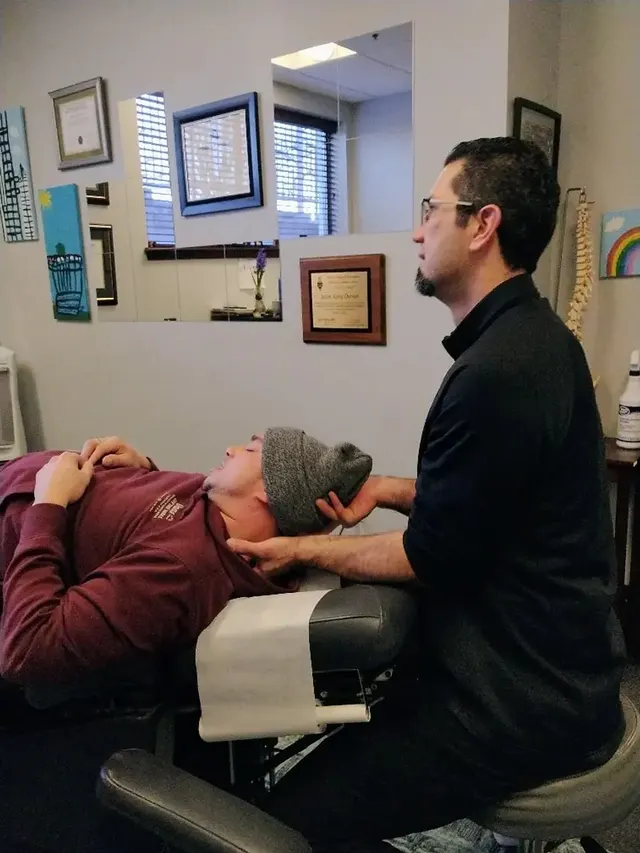
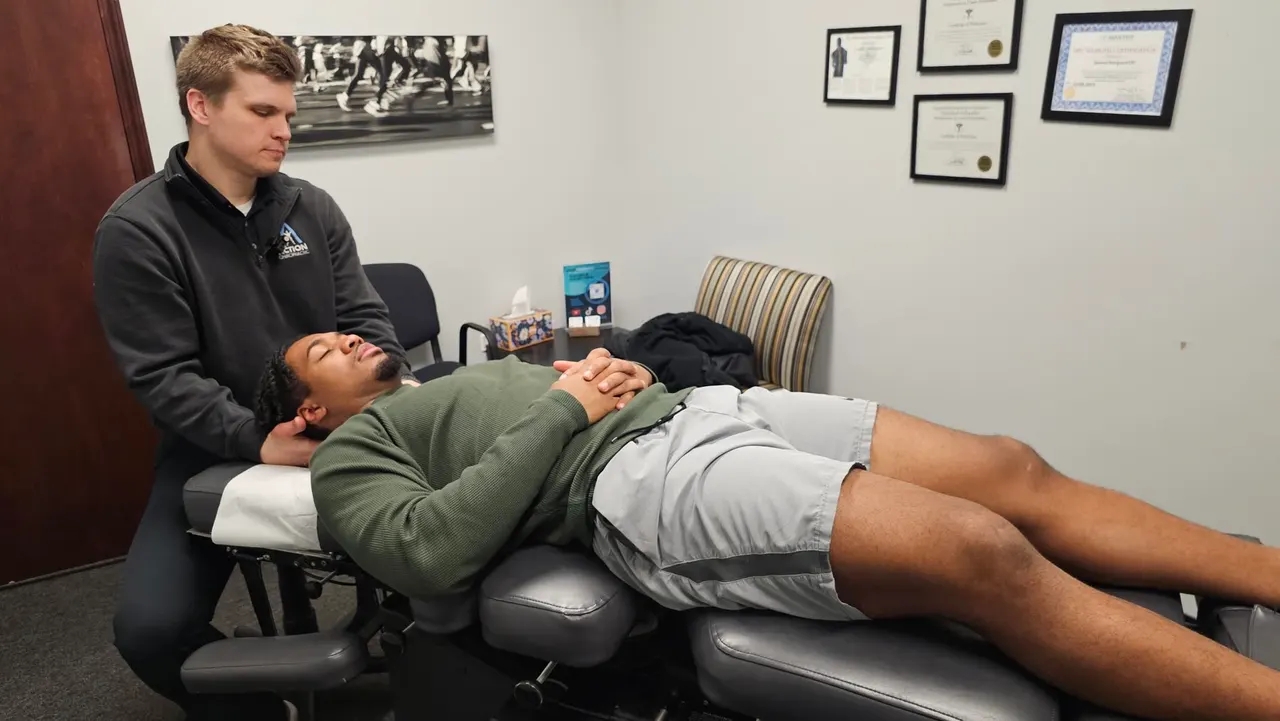
Adjusting through the neck and mid-back, soft tissue work across the upper shoulders, and specific movement to hold the range you get back.
Between visits
What helps at home.
Raise the screen
A screen at eye level keeps your head over your shoulders instead of in front of them.
Move it little and often
Short sets of easy neck turns and shoulder rolls through the day help more than one long stretch in the evening.
Check your pillow
If mornings are the worst part, your pillow height is worth looking at. The aim is a neck level with the rest of your spine.
When to see a doctor first
Signs this needs medical attention.
- Neck pain after a fall, collision or other injury
- Fever with a stiff neck and headache, or sensitivity to light
- Numbness, tingling or weakness spreading into the arms
- Pain that is constant and getting worse, including at night
- Unexplained weight loss or a history of cancer
If any of these apply, see a medical doctor before booking with us. If the symptoms are sudden or severe, go to the emergency room or call 911.
Common questions
Neck Pain FAQs
Can poor posture cause neck pain?
Sustained positions, such as hours with the head forward over a laptop, are a common contributor. It is usually less about one perfect posture and more about spending too long in any single one.
Do I have to have my neck adjusted?
No. We only adjust the neck when the exam supports it, and if you would rather not, say so. Soft tissue work and gentle mobilization are always an option.
Why does my neck pain come with headaches?
The joints and muscles of the upper neck can refer pain into the head, often starting at the base of the skull. When that is the pattern, treating the neck is usually part of the plan.
“The purpose of chiropractic care is not the treatment of conditions or disease; rather, it is the restoration of normal body function.”
Explore more
Other things we work with

Start here
Your health deserves
better.
Whether something hurts today or you simply want to move well for a long time, it starts with one visit.