Knee Pain
Knee pain in runners, lifters and anyone whose training volume climbed faster than their tissue adapted.

What it is
Understanding knee pain
The knee is usually the victim rather than the culprit. We look at the hip and the ankle before concluding the problem is where the pain is.
Treatment addresses the local tissue, but the plan that keeps it away is almost always about control at the hip.
What is behind it
Where it usually comes from.
A rapid jump in training load. Volume or intensity climbing faster than the tissue can adapt is the most common story we hear.
Hip and glute weakness. When the hip does not control the thigh, the knee absorbs the rotation instead.
Restricted ankle motion. Limited ankle dorsiflexion changes how the knee loads on every step and every squat.
Footwear or surface change. New shoes or a switch of running surface alters the loading pattern more than people expect.
Your first visit
What we check first.
We look at the knee itself and at everything above and below it: hip strength and control, ankle and foot mechanics, and how you squat, lunge and step down. Most overuse knee pain is about how load reaches the knee.
Your training history matters as much as the exam, especially any recent jump in volume, a new sport or new shoes. If anything suggests a ligament or cartilage injury that needs imaging or an orthopedic opinion, we refer you.
How we treat it
Our approach to knee pain.
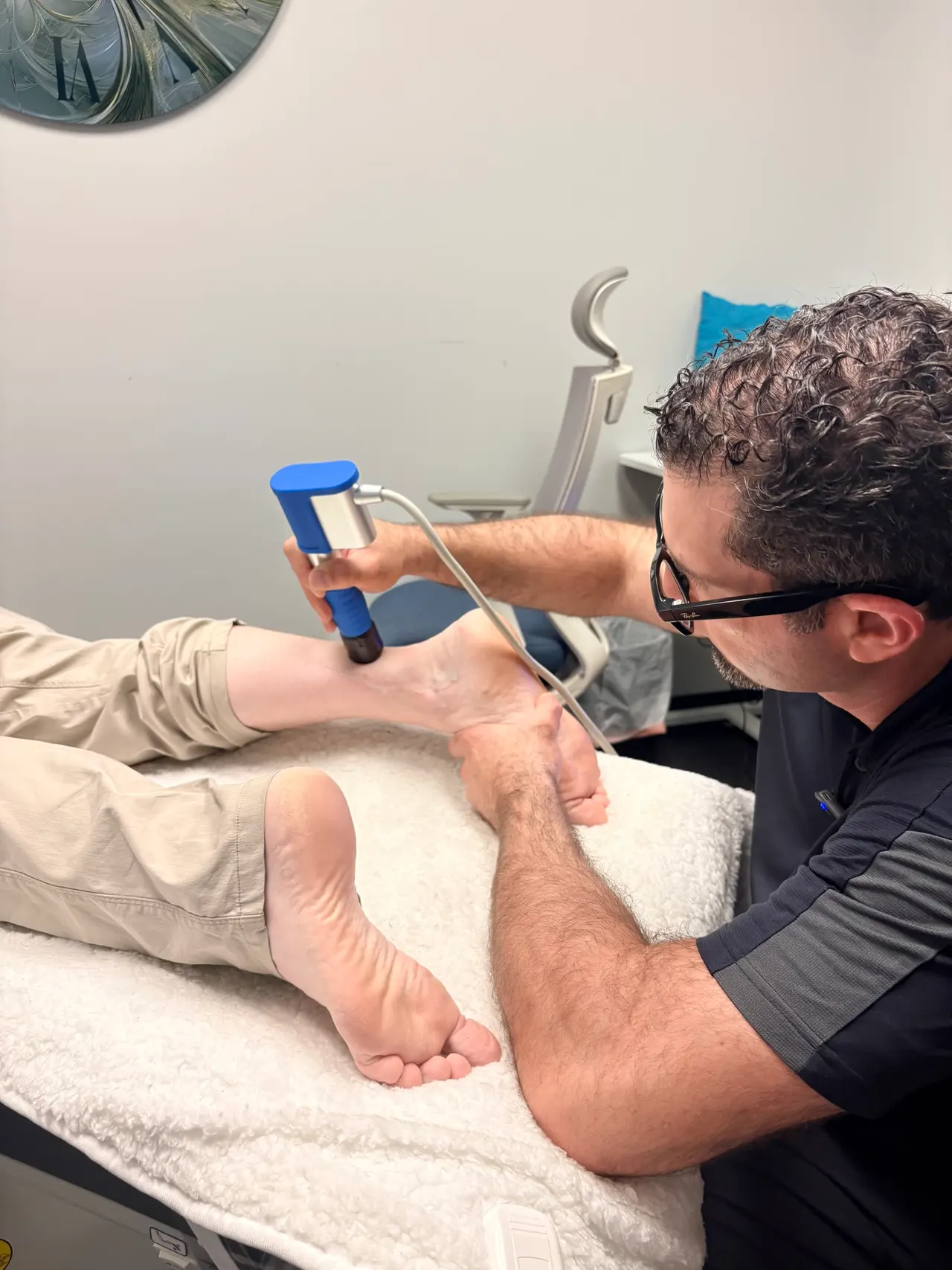
Soft tissue work through the quadriceps, IT band and calf, extremity adjusting where the joint is restricted, then loading the hip properly.
Between visits
What helps at home.
Reduce the load, do not stop
Cut back the activity that flares it rather than stopping everything. Pain that stays mild during and after is a reasonable guide.
Strengthen the hips
Weak hip muscles let the knee drift inward under load. We will give you specific exercises; until then, avoid deep, painful knee bends.
Build volume gradually
When you return to running or training, add distance or load in small steps rather than picking up where you left off.
When to see a doctor first
Signs this needs medical attention.
- You cannot put weight on the leg
- The knee locks, gives way, or swelled quickly after an injury
- A pop at the time of injury followed by swelling, or a visible deformity
- A hot, red, swollen knee or a fever
- Calf pain or swelling, especially after a long journey or surgery
If any of these apply, see a medical doctor before booking with us. If the symptoms are sudden or severe, go to the emergency room or call 911.
Common questions
Knee Pain FAQs
Should I keep running with knee pain?
Often you can, at a reduced volume, if the pain stays mild and settles by the next day. Pain that builds during a run or makes you limp is a sign to back off and get it assessed.
Can chiropractic help knee pain?
Knee pain from overuse and load is often something we can help with through soft tissue work, joint mobility and a progressive strengthening plan. Ligament tears and some cartilage injuries need an orthopedic opinion, and we refer you if that is what we find.
Why does my knee hurt going down stairs?
Stepping down puts high load through the front of the knee, so it is a common trigger for pain around the kneecap. It is often tied to hip and thigh control, which is why both are part of the plan.
“The purpose of chiropractic care is not the treatment of conditions or disease; rather, it is the restoration of normal body function.”
Explore more
Other things we work with
Start here
Your health deserves
better.
Whether something hurts today or you simply want to move well for a long time, it starts with one visit.