Sciatica
Pain that travels from the low back or buttock down the leg, following the path of the sciatic nerve.
What it is
Understanding sciatica
The first job is working out where along the path the nerve is actually being irritated. Sciatica from the disc and sciatica from the hip look similar to the patient and need different treatment.
That is also why we do not run a single protocol for it. The assessment determines whether decompression, soft tissue work through the hip, or both, is the right starting point.
What is behind it
Where it usually comes from.
Disc irritation in the low back. A bulging lumbar disc can crowd the nerve root where it exits the spine.
Prolonged sitting. Extended sitting loads the lumbar discs and shortens the hip flexors and glutes at the same time.
Muscular entrapment through the hip. Tight tissue around the deep hip rotators can compress the nerve on its way down the leg.
Repetitive bending and lifting. Repeated loading through a rounded low back concentrates stress at the same segment.
Your first visit
What we check first.
We trace the symptoms along the leg and test which movements bring them on: bending, sitting, a straight-leg raise, pressure through the hip. Reflexes, strength and sensation in both legs tell us how irritated the nerve is and roughly where.
That separates sciatica coming from the low back from sciatica coming from the hip, which need different starting points. If anything points to a problem that needs a medical opinion first, we refer you before treating.
How we treat it
Our approach to sciatica.
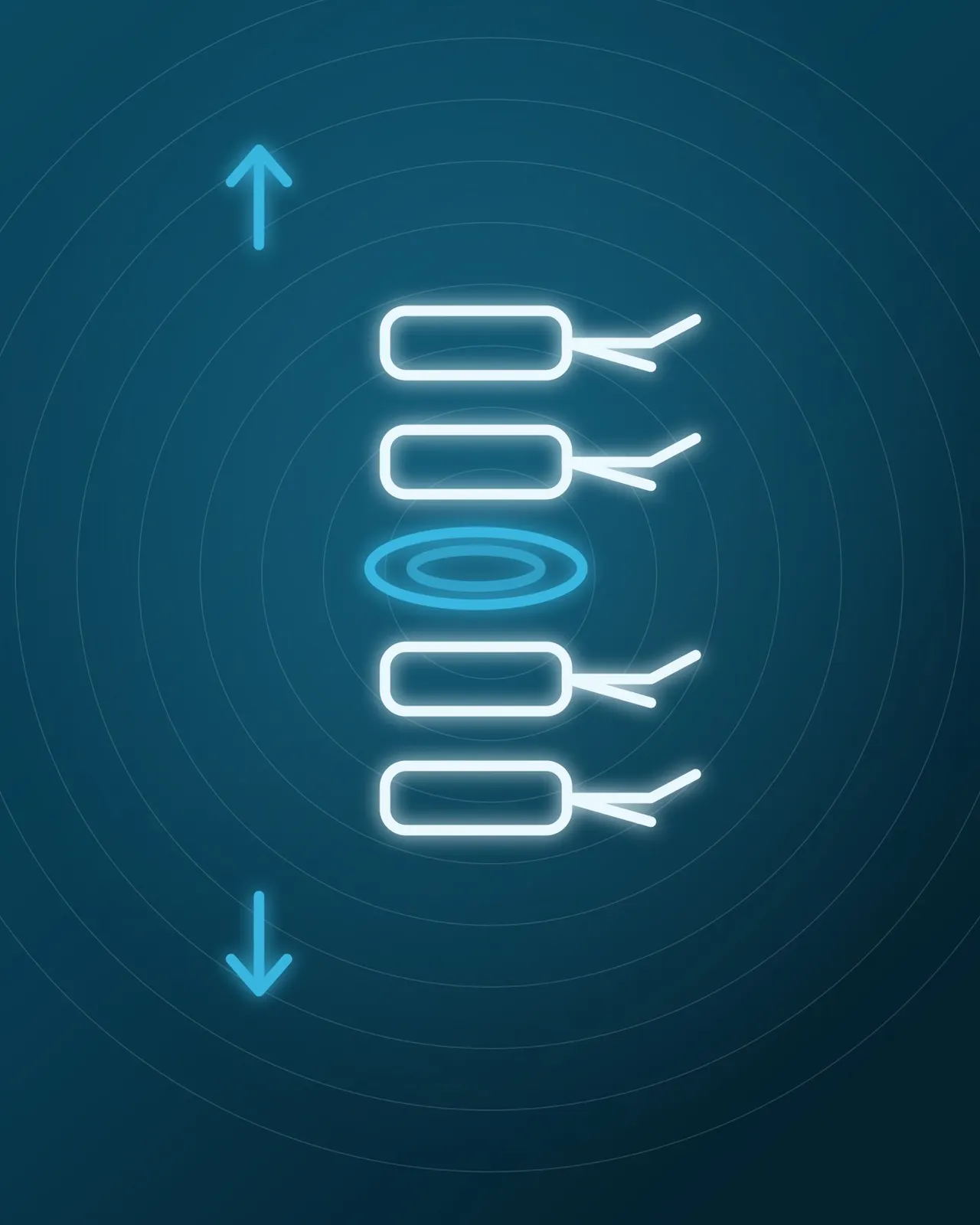
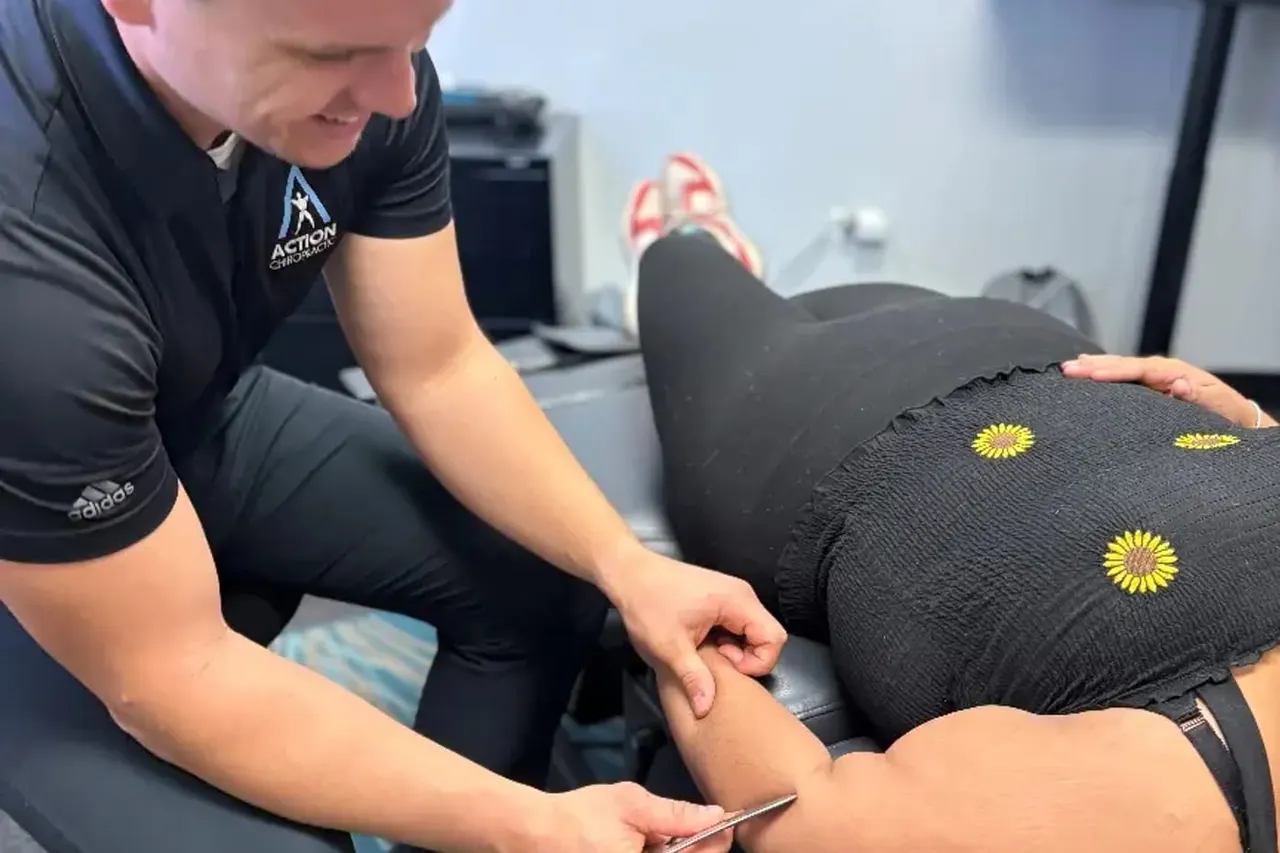
Care typically combines decompression at the low back with soft tissue work through the glutes and deep hip rotators, then loading to keep it settled.
Between visits
What helps at home.
Break up sitting
Get up and walk for a few minutes every 30 to 45 minutes. Long, unbroken sitting is one of the most reliable ways to aggravate it.
Keep walking
Short, regular walks within a comfortable range tend to help more than bed rest.
Go easy on bending and lifting
Bending forward to lift, especially from a rounded low back, loads the same segment again. Hinge at the hips and keep loads close to your body.
When to see a doctor first
Signs this needs medical attention.
- Any loss of bladder or bowel control, or difficulty passing urine
- Numbness in the groin, inner thighs or around the back passage
- Weakness in the leg that is getting worse, such as the foot slapping down as you walk
- Symptoms in both legs at once
- Fever, unexplained weight loss, or a history of cancer alongside the back pain
If any of these apply, see a medical doctor before booking with us. If the symptoms are sudden or severe, go to the emergency room or call 911.
Common questions
Sciatica FAQs
Should I rest or keep moving?
Complete rest usually makes sciatica stiffer rather than better. Which movement helps depends on where the irritation is, which is what we work out at the first visit.
Is sciatica a diagnosis?
Not exactly. Sciatica describes where the symptoms travel, along the sciatic nerve. The cause can be a disc, narrowing around the nerve root, or tight tissue through the hip, and finding which one is the point of the first visit.
Can chiropractic help with sciatica?
Many people with sciatica do well with conservative care such as decompression, soft tissue work and graded exercise. After the assessment we will tell you whether we think it suits your case, and refer you on if it does not.
How long does sciatica take to settle?
It varies with the cause and how long it has been going on. You get an honest estimate after the assessment, and we re-check progress rather than guessing up front.
“The purpose of chiropractic care is not the treatment of conditions or disease; rather, it is the restoration of normal body function.”
Explore more
Other things we work with
Start here
Your health deserves
better.
Whether something hurts today or you simply want to move well for a long time, it starts with one visit.