Shoulder Pain
Rotator cuff irritation, impingement and the overhead pain that shows up in lifters, swimmers and anyone who works with their arms up.

What it is
Understanding shoulder pain
Shoulder pain is often not a shoulder problem. We assess the mid-back and the shoulder blade first, because that is frequently where the restriction driving it sits.
This is one of the most common presentations we see, and it responds well to combining hands-on work with specific loading.
What is behind it
Where it usually comes from.
Repetitive overhead loading. Pressing, throwing or working overhead repeatedly irritates the tissue passing under the acromion.
Restricted mid-back. A stiff thoracic spine limits how far the shoulder blade can rotate, so the shoulder joint makes up the difference.
Scapular control. When the shoulder blade does not move in sequence with the arm, the joint takes load it was not meant to.
An unresolved strain. An earlier injury that was rested rather than rehabilitated often leaves a weak link behind.
Your first visit
What we check first.
We test the shoulder through its full range and under load: overhead, behind the back and against resistance. The shoulder blade, mid-back and neck get checked too, because shoulder pain often starts with how the shoulder blade moves.
That points to the irritated tissue, such as the rotator cuff tendons or the space they move through. If the exam suggests a tear or a joint injury that needs imaging or an orthopedic opinion, we refer you.
How we treat it
Our approach to shoulder pain.
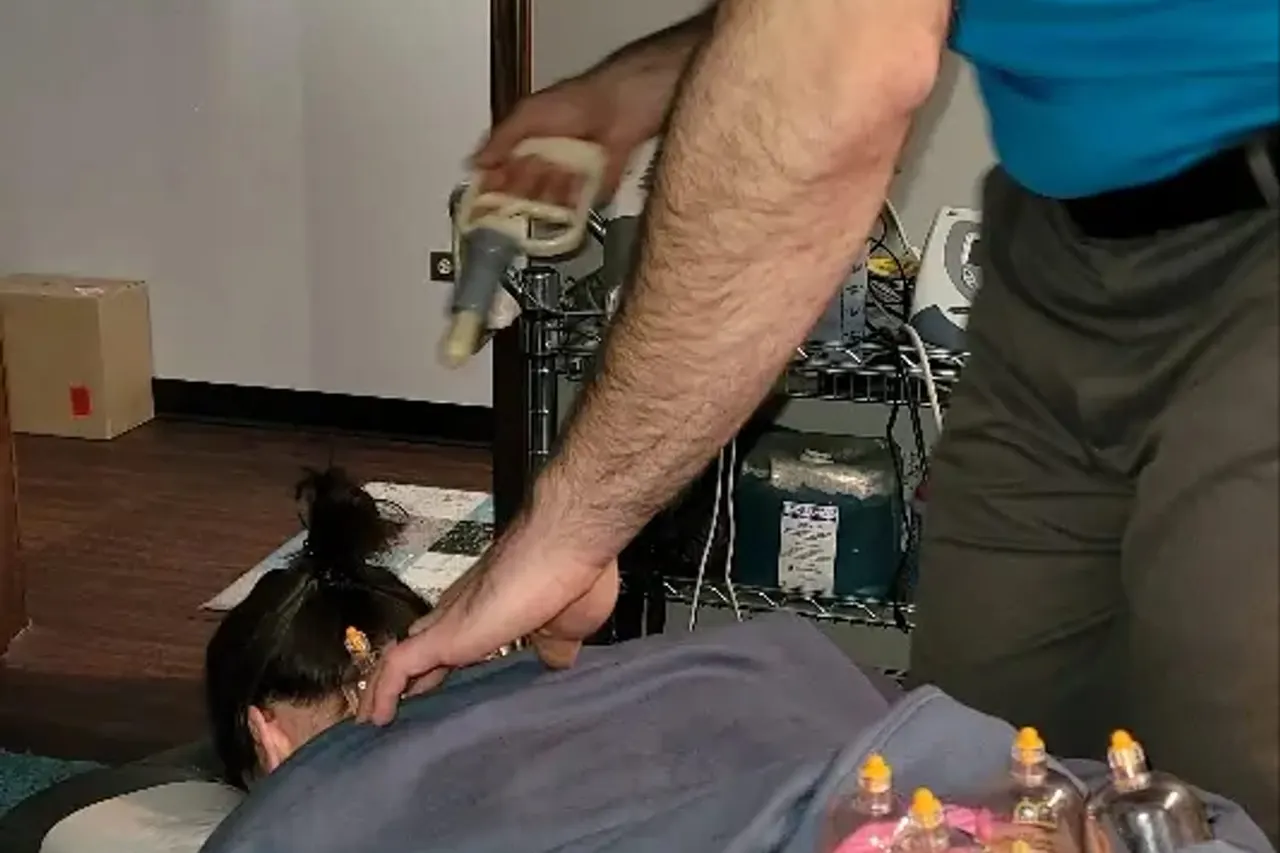
ART and needling through the cuff and surrounding tissue, adjusting through the mid-back, then progressive loading to rebuild control overhead.
Between visits
What helps at home.
Keep it moving below the pain
Gentle movement in the range that does not hurt is better than holding the arm still, which can stiffen the shoulder.
Cut back overhead work for now
Reduce heavy pressing, pulling and repetitive overhead reaching until we have rebuilt control. Ask us when to bring it back.
Sleep on the other side
Lying on the painful shoulder compresses irritated tissue. If you sleep on your back, a pillow under the arm helps.
When to see a doctor first
Signs this needs medical attention.
- You cannot lift the arm after a fall or injury
- A visible deformity, or a shoulder that feels like it has slipped out of place
- Shoulder pain with chest pain, shortness of breath or sweating
- A hot, red, swollen joint or a fever
- A sudden loss of strength in the arm
If any of these apply, see a medical doctor before booking with us. If the symptoms are sudden or severe, go to the emergency room or call 911.
Common questions
Shoulder Pain FAQs
Do I need an MRI for shoulder pain?
Usually not to start. Imaging is useful after a significant injury, with marked weakness, or when the shoulder is not improving as expected. If we think you need one, we refer you.
Can you treat a rotator cuff injury?
We see rotator cuff irritation often and work on it with soft tissue work, mobility and progressive strengthening. A complete tear may need an orthopedic opinion, and the assessment helps tell which you are dealing with.
Why does my shoulder hurt when I raise my arm?
Pain partway through raising the arm often comes from the rotator cuff tendons being pinched as they pass under the top of the shoulder. How the shoulder blade moves has a lot to do with it, which is why we assess the whole region.
“The purpose of chiropractic care is not the treatment of conditions or disease; rather, it is the restoration of normal body function.”
Explore more
Other things we work with
Start here
Your health deserves
better.
Whether something hurts today or you simply want to move well for a long time, it starts with one visit.