Headaches
Tension headaches that start at the base of the skull and wrap forward, often traceable to the neck rather than the head.

What it is
Understanding headaches
Tension headaches with a cervical origin usually have findings in the neck to match. We check for those before assuming the headache is the whole story.
If what we find does not fit that pattern, we will tell you, and we will say when something is better looked at elsewhere.
What is behind it
Where it usually comes from.
Sustained forward head posture. The muscles at the base of the skull work continuously to hold the head up against gravity.
Restricted upper cervical motion. When the top segments of the neck stop moving well, the surrounding muscle stays loaded.
Jaw clenching. Clenching through the day keeps the muscles of the jaw and temple under constant tension.
Screen and desk setup. A monitor at the wrong height sets the neck position for the whole working day.
Your first visit
What we check first.
We go through the pattern in detail: where the headache starts, when it comes on, how long it lasts and what helps. A headache that builds from the base of the skull through the working day points somewhere very different from one that arrives suddenly.
We then examine the upper neck, jaw and shoulders for the restrictions that commonly feed tension-type headaches. If your history suggests a headache that needs a medical work-up, we refer you before treating.
How we treat it
Our approach to headaches.
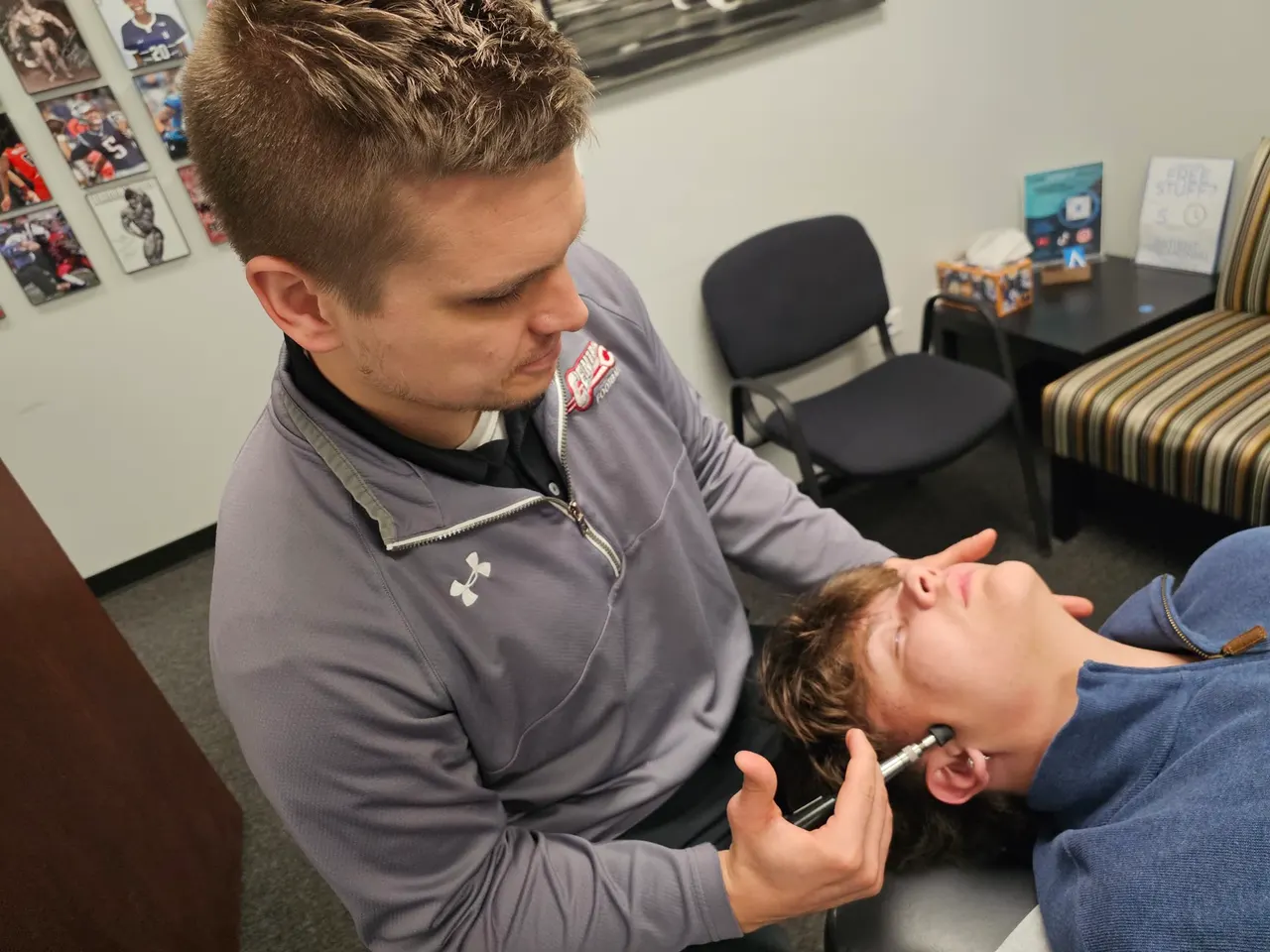
Care focuses on the upper neck and the muscles at the base of the skull, combining adjusting with soft tissue work and, where useful, needling.
Between visits
What helps at home.
Track your headaches
Note when each one starts, how long it lasts and what you were doing. Patterns show up quickly and make treatment more targeted.
Take breaks from the screen
Every 30 to 45 minutes, sit back, drop your shoulders and look away from the screen for a minute.
Cover the basics
Regular meals, enough water and consistent sleep remove some of the most common triggers.
When to see a doctor first
Signs this needs medical attention.
- A sudden, severe headache that reaches full strength within a minute
- A headache with fever, a stiff neck or a rash
- A headache after a blow to the head
- Weakness, numbness, confusion, or changes in speech or vision
- A new or changing pattern of headaches, especially over the age of 50
If any of these apply, see a medical doctor before booking with us. If the symptoms are sudden or severe, go to the emergency room or call 911.
Common questions
Headaches FAQs
What kind of headaches can chiropractic help with?
The ones we see most come from the neck and the muscles around it, often called tension-type or cervicogenic headaches. Headaches that need a medical diagnosis are not ours to treat, and we will refer you if your history points that way.
Do you treat migraines?
Migraine is a medical diagnosis and should be managed with your doctor. Some people with migraines also carry neck and shoulder tension that we can work on alongside their medical care, and we will be clear about what we can and cannot help with.
How do I know if my headache is coming from my neck?
Clues include a headache that starts at the base of the skull, gets worse with certain neck positions or long periods at a desk, and comes with neck stiffness. The assessment confirms whether the neck is involved.
“The purpose of chiropractic care is not the treatment of conditions or disease; rather, it is the restoration of normal body function.”
Explore more
Other things we work with
Start here
Your health deserves
better.
Whether something hurts today or you simply want to move well for a long time, it starts with one visit.