Carpal Tunnel Syndrome
Numbness, tingling and weakness in the hand, from irritation of the median nerve as it passes through the wrist.

What it is
Understanding carpal tunnel
We check the whole path of the nerve, not just the wrist. A median nerve irritated at the neck or forearm produces hand symptoms that look identical to a wrist problem.
That distinction changes the treatment completely, which is why the assessment covers the arm from the neck down.
What is behind it
Where it usually comes from.
Repetitive hand and wrist work. Typing, tool use or assembly work performed the same way for hours loads the tunnel continuously.
Sustained wrist position. Working with the wrist held in extension narrows the space the nerve passes through.
Forearm tissue restriction. Tightness through the forearm flexors adds tension to the tissue the nerve runs beneath.
Nerve restriction further up the arm. The median nerve can be irritated at the neck, shoulder or elbow, producing hand symptoms.
Your first visit
What we check first.
We confirm where the symptoms start and which fingers they affect, then test sensation, grip and the thumb muscles. The neck, shoulder and elbow get checked too, because the median nerve can be irritated anywhere along its path, not only at the wrist.
That tells us whether this looks like true carpal tunnel or nerve irritation further up the arm. If the numbness is constant, or there is weakness or muscle wasting, we refer you for nerve testing and a medical opinion.
How we treat it
Our approach to carpal tunnel.
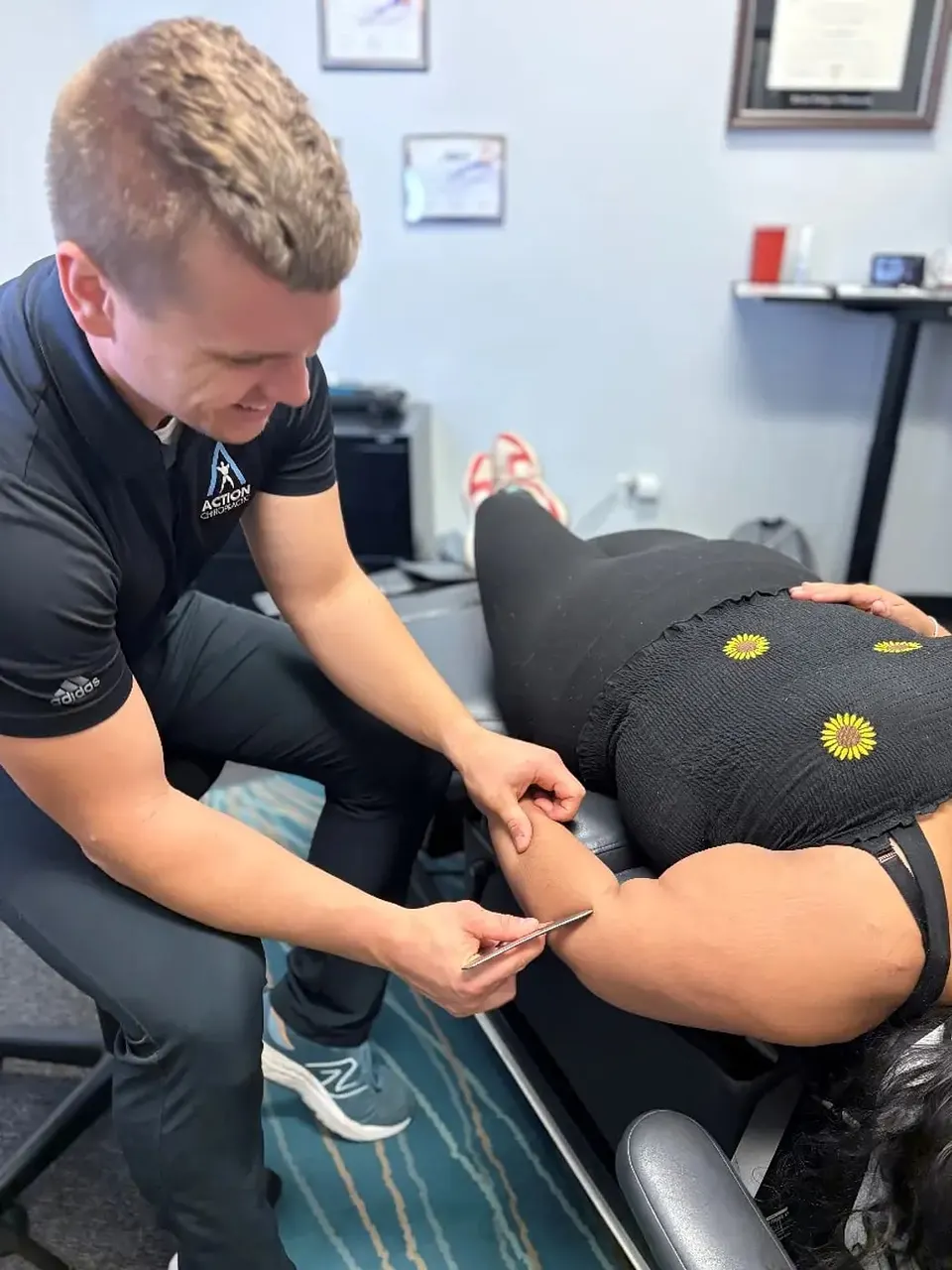
ART along the course of the nerve, soft tissue work through the forearm, and extremity adjusting at the wrist and elbow where indicated.
Between visits
What helps at home.
Keep the wrist straight at night
Many people sleep with their wrists bent, which squeezes the tunnel. A simple wrist splint worn at night can help.
Break up repetitive work
Change tasks or take a short break every 30 to 45 minutes when typing or using tools.
Relax your grip
Holding a mouse, phone or tool tighter than you need to adds pressure. Notice it and ease off.
When to see a doctor first
Signs this needs medical attention.
- Numbness that is constant rather than coming and going
- Weakness, dropping things, or wasting of the muscle at the base of the thumb
- Symptoms that started after a wrist injury or fracture
- Sudden numbness or weakness in the face, arm or leg, which needs emergency care
If any of these apply, see a medical doctor before booking with us. If the symptoms are sudden or severe, go to the emergency room or call 911.
Common questions
Carpal Tunnel FAQs
Can carpal tunnel get better without surgery?
Mild to moderate carpal tunnel symptoms often improve with conservative care such as activity changes, night splinting and treatment of the tissue around the nerve. Severe or worsening cases may need a surgical opinion, and we will tell you if yours looks that way.
Is it always carpal tunnel if my hand goes numb?
No. Irritation of nerves at the neck, elbow or forearm can feel very similar, which is why we examine the whole arm rather than only the wrist.
Why is it worse at night?
Wrists often bend while you sleep, which raises pressure in the tunnel. That is why night symptoms are one of the most common early signs.
“The purpose of chiropractic care is not the treatment of conditions or disease; rather, it is the restoration of normal body function.”
Explore more
Other things we work with

Start here
Your health deserves
better.
Whether something hurts today or you simply want to move well for a long time, it starts with one visit.